The Multi-Sport Advantage: How Playing Multiple Sports Reduces Injury Risk
The Specialisation Trap
For decades, the youth sports culture has promoted early specialisation—the idea that young athletes should focus intensely on a single sport from an early age. But cutting-edge research is telling a very different story.
The numbers are striking:
- Athletes who specialise in one sport are twice as likely to suffer lower extremity injuries compared to those who play multiple sports
- Nearly three times higher risk of overuse injuries in the hip or knee when spending more than 8 months annually in one sport
- Early specialisation increases overall injury risk by 70-93%, according to recent studies from leading sports medicine institutions
What the Research Shows
A groundbreaking study by the University of Wisconsin School of Medicine and Public Health examined more than 1,500 high school athletes. The findings were clear: young athletes who participated in multiple sports experienced significantly fewer injuries than their single-sport counterparts.
Even more compelling evidence comes from professional athletes. Research on NBA players revealed that multisport athletes in high school:
- Participated in more games during their professional careers
- Experienced 25% fewer major injuries (25% vs 43%)
- Had longer professional careers, with 94% remaining active in the league compared to 81% of single-sport specialists
Why Multiple Sports Protect Young Athletes
1. Balanced Movement Patterns
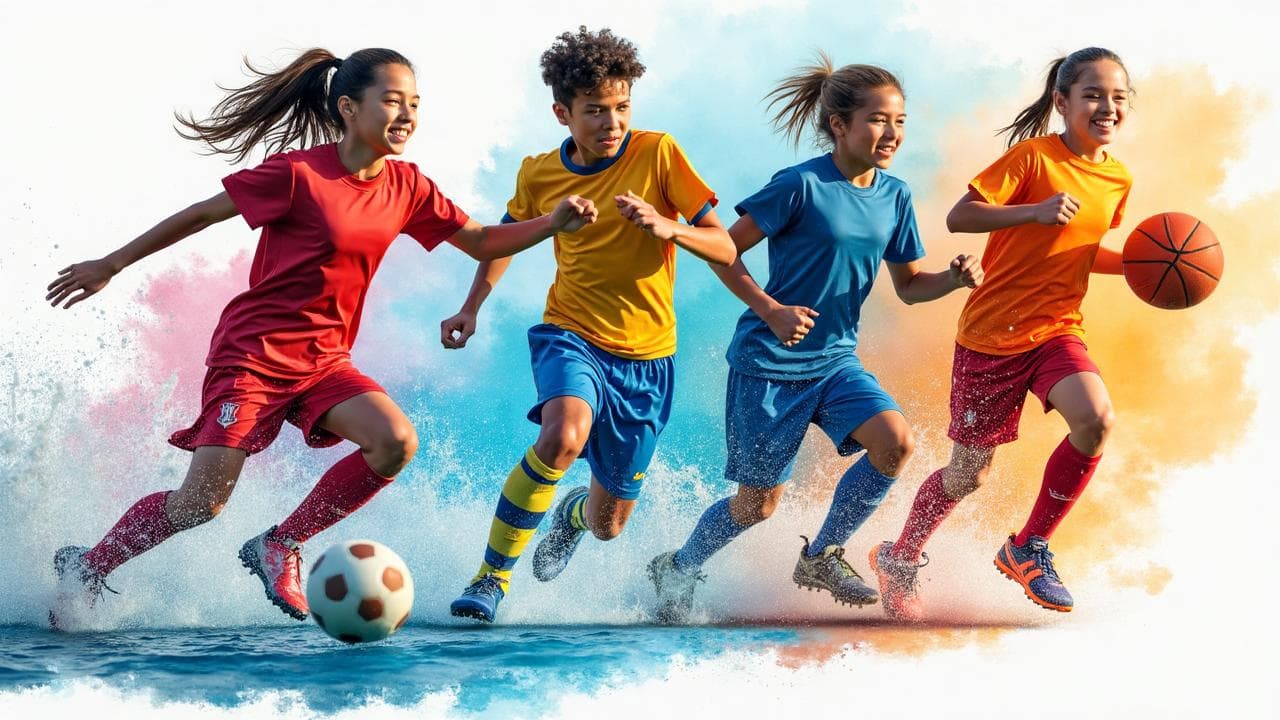
Different sports require different movement patterns and muscle groups. Soccer develops explosive lateral movement, basketball emphasises vertical power, swimming builds endurance, while rugby develops contact tolerance. This variety strengthens different muscle groups and prevents repetitive stress injuries.
2. Active Recovery Between Sports
When a young athlete rotates between sports, they're incorporating natural recovery periods. The muscles and joints used intensively in one sport get recovery time during another discipline.
3. Reduced Overtraining
Overtraining is one of the primary drivers of youth sports injuries. Playing multiple sports naturally distributes training intensity across different athletic domains, reducing the cumulative stress on any single body system.
4. Mental Health Benefits
Variety reduces burnout and maintains the joy in sports. Athletes who specialise in one sport experience higher burnout rates, which ironically leads to worse performance and increased injury risk.
The Burnout Connection
Research shows a strong correlation between sport specialisation and burnout:
- Athletes specialising in one sport report higher psychological stress
- Burnout is associated with greater vulnerability to injury
- Multi-sport participants show improved long-term athletic success and reduced burnout
Real-World Application: The PDP Advantage
This is why the Player Development Passport approach is so valuable. By helping parents and coaches manage multiple sports passports simultaneously, PDP enables families to:
- Track injury history across all sports, identifying patterns and risks
- Monitor overall training load, ensuring young athletes aren't overcommitted
- Schedule strategically, rotating sports to provide natural recovery periods
- Celebrate cross-sport progress, recognising the unique benefits each discipline provides
- Make data-driven decisions about when to reduce intensity in any one sport
Key Takeaways
✓ Single-sport specialisation increases injury risk by 70-93% ✓ Multi-sport athletes experience fewer injuries and longer athletic careers ✓ Playing multiple sports provides natural recovery and prevents overuse injuries ✓ Variety reduces burnout while improving long-term athletic success ✓ Young athletes should be encouraged to explore multiple sports until at least age 14
What Parents Should Know
If your child is currently specialising in one sport, consider: introducing a complementary second sport that uses different movement patterns. For example:
- Gaelic football player → Add swimming or gymnastics for flexibility and core strength
- Rugby player → Add basketball for agility and change-of-direction skills
- Swimmer → Add athletics or gymnastics for land-based strength development
The evidence is clear: multi-sport participation isn't just acceptable—it's the evidence-based path to healthier, happier, and more successful young athletes.
Related Articles

"It's Not Just About Winning": What Gen Z Athletes Really Think About Competition
Surveys of thousands of young people show that today's athletes still care about winning—but on very different terms than many adults assume.

What Scouts Actually Want to See in a Player Development Record
Clubs obsess over one-off trial performances. Recruiters increasingly care more about who a player has been becoming over several seasons.

The First 30 Days: A Coach Onboarding Blueprint That Stops Volunteer Burnout
Up to two-thirds of community sports organisations struggle to retain volunteer coaches. A simple 30-day onboarding plan can change that.
More in Player Development
View All Player Development"It's Not Just About Winning": What Gen Z Athletes Really Think About Competition
Surveys of thousands of young people show that today's athletes still care about winning—but on very different terms than many adults assume.
What Scouts Actually Want to See in a Player Development Record
Clubs obsess over one-off trial performances. Recruiters increasingly care more about who a player has been becoming over several seasons.
The First 30 Days: A Coach Onboarding Blueprint That Stops Volunteer Burnout
Up to two-thirds of community sports organisations struggle to retain volunteer coaches. A simple 30-day onboarding plan can change that.
GAA Player Development: Building Skills from U8 to Senior Level
Discover how GAA clubs are implementing structured development pathways that focus on fundamental movement skills, tactical awareness, and mental resilience across Gaelic Football and Hurling.